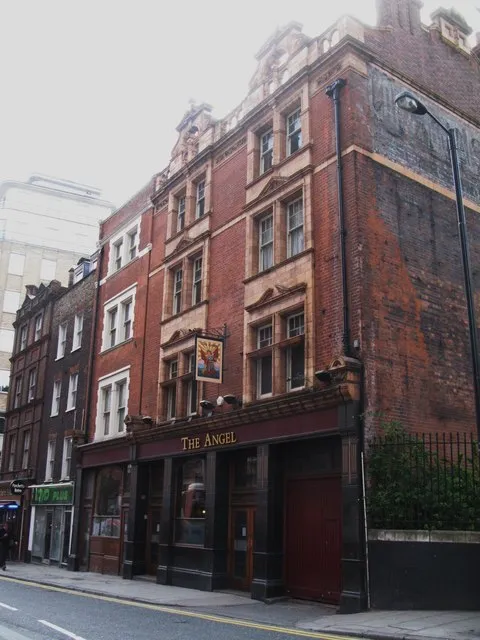
Built for Drizzle: How to Spec Signage That Still Looks Sharp After a British Winter
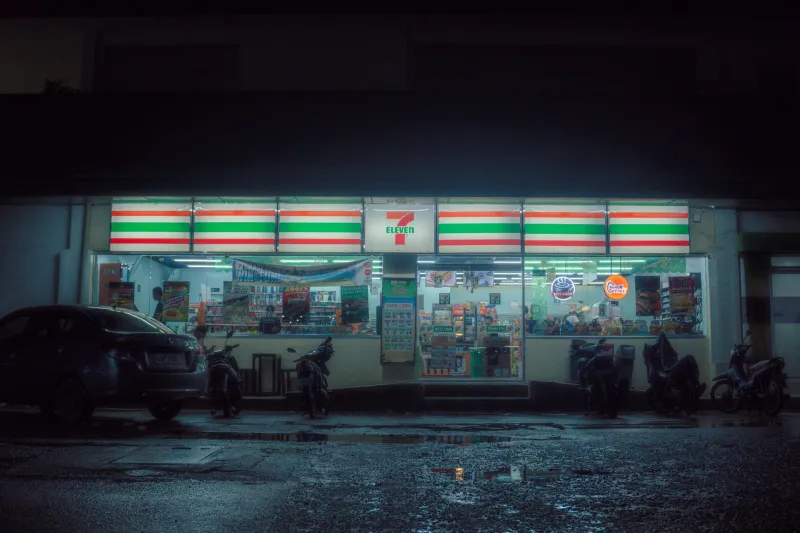
British weather doesn't do drama. It does persistence. Nine months of soft, sideways drizzle, a fortnight of hard frost, a sudden April glare, then a summer that bleaches everything it touches. Signage installed in a hurry tends to fail in ways nobody photographs: a ghost of a logo where the ink used to be, a white bloom creeping under a laminate, a fascia panel that has gone the colour of weak tea.
The good news is that this is a solved problem. You don't need space-grade materials to survive a Norfolk winter — you need the right materials, specified for the right exposure, fixed properly and checked twice a year. Here's how we think about it when we're putting a specification together.
Start with what the weather actually does
Four things attack an outdoor sign, and they don't work alone.
Water gets in and then freezes, and the expansion prises apart joints and seals. UV light breaks polymer chains, which shows up first as fading and then as chalking or brittleness. Salt from coastal air is mildly corrosive and cheerfully attacks fixings and cut edges. And thermal movement — the daily expand-and-contract cycle — works screws loose and stresses joints that were tight on installation day.
Every sensible material decision flows from those four. If a supplier can't tell you how their product handles each one, that's your answer.
Acrylic or aluminium composite? The honest answer
These two do most of the work on UK high streets, and they're not rivals so much as different tools.
Cast acrylic is the classic choice for cut letters, logos and face panels. It holds colour well, takes a polish, and stands up to UV better than most people expect. It is, however, brittle. Specify at least 5mm for anything larger than A3, allow oversized fixing holes so the panel can move, and avoid tightening fixings hard against the face. Acrylic also scratches, so think twice about ground-level panels near a loading bay.
Aluminium composite material — two thin aluminium skins bonded to a polyethylene or fire-rated core — is the workhorse for fascias and large flat panels. It's rigid, light, doesn't shatter, and accepts printed graphics beautifully. The catch is the edge: unprotected cut edges can absorb moisture and start to delaminate, so insist on sealed or folded returns rather than raw cuts pointing at the sky. Flat panels should never be fixed dead flat to a wall, either — you want a small air gap so the back can dry.
For anything structural or heavily handled, fabricated aluminium wins. It costs more and it will outlast everything else on this list.
Powder coating: the finish that earns its keep
Bare aluminium oxidises to a dull grey. A decent powder coat keeps a frame looking new for a decade or more, but the quality varies enormously.
For external work, ask for a polyester powder coating applied at a stated film thickness — around 60 to 80 microns is the usual architectural benchmark — over a properly pre-treated substrate. Cheaper coatings on poorly prepared metal fail at the corners and edges first, which is exactly where you notice it. If the sign sits within a few miles of the sea, step up to a more corrosion-resistant grade and expect a shorter recoat cycle regardless.
One practical tip: a painted finish is far easier to touch up than an anodised one. On a busy shopfront where trolleys and van mirrors do their worst, that matters more than the brochure claims.
Inks, vinyl and the UV problem
Print is where fading happens, and it happens fast on south-facing elevations.
If your graphics are printed, use UV-curable or latex inks with a matching over-laminate, and ask what the manufacturer's outdoor durability figure actually covers — colour retention, adhesion, or both. For cut vinyl, cast films comfortably outperform calendared ones outdoors; calendared vinyl is fine for short-term or indoor work and a false economy on a permanent fascia.
Colour choice matters too. Deep reds, oranges and certain blues are the first to shift. If your brand depends on a precise colour, get a physical sample weathered on site before you commit to a full production run.
Fixings, seals and drainage — where leaks begin
Most sign failures we see are fixing failures, not material failures.
- Use stainless steel fixings outdoors; inland grade 304 is usually fine, coastal sites want 316.
- Never mix metals in a way that invites galvanic corrosion — aluminium fixings into steel, for example.
- Use neutral-cure silicone, not the acetic-smelling stuff that can attack metal finishes.
- Fix into mortar joints on masonry, not the face of the brick or stone.
- Leave a small gap at the bottom edge of any panel so water can escape rather than pool.
That last point is the one people forget. A beautifully made sign with nowhere for water to drain will still be a problem in eighteen months.
Coastal sites deserve their own conversation
If you're within sight of the sea, assume everything needs upgrading: 316 stainless, marine-grade coatings, more frequent cleaning, and a shorter realistic lifespan. Salt spray plus wind-driven grit is a genuinely harsh combination, and inland specifications quietly underperform there.
A maintenance routine that fits a small team
You don't need a contract. You need a diary entry.
Twice a year — spring and late autumn — wash panels with warm water and a pH-neutral soap, rinse thoroughly, and look at the things nobody looks at: seals, cut edges, the tops of letters, the fixings behind the panel. A soft car brush is ideal; abrasive pads and pressure washers on full blast aren't. Replace any sealant that has cracked or pulled away before winter rather than after.
Cost versus longevity: where to spend
If budget is tight, spend it in this order. First, fixings and sealing. Second, the coating on any metal frame. Third, the print laminate. A moderately priced panel with excellent fixings and a proper powder coat will outlast a premium panel bolted on with whatever was in the van.
Where you can economise: internal reception signs, short-life promotional graphics, and anything under a canopy. Where you shouldn't: south-facing fascias, coastal elevations, and anything fixed above head height that will need a tower or a cherry picker to replace.
Signage is one of the few things a business buys that has to look right every single day for a decade. Specifying for the weather isn't pessimism — it's just how you get your money's worth.