Planners, Heritage Officers and the High Street: Getting Sign Approval Without Losing Your Look
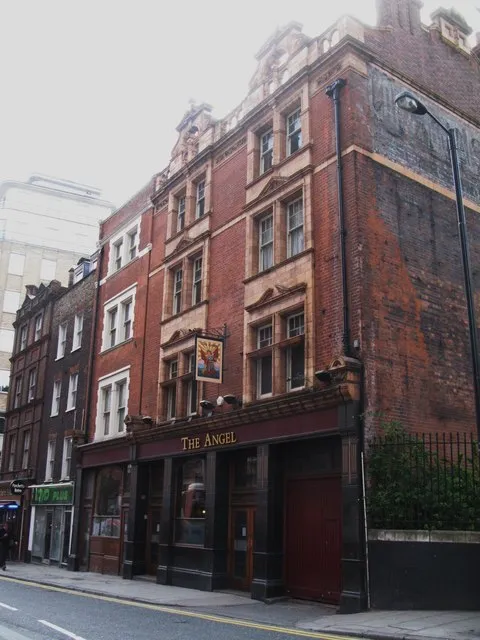
Photo: Mike Quinn, CC BY-SA 2.0, via Wikimedia Commons
Nobody opens a business dreaming about advertisement regulations. But signage is one of the few brand decisions that can be quietly overruled by someone who has never met your customers — a planner, a conservation officer, a landlord's surveyor.
That isn't a reason to water down your identity. It's a reason to understand the rules early, so the design conversation happens once, with everyone in the room, instead of in three rounds of correspondence.
Here's the landscape as it stands, and how we'd approach it.
First, work out which permission you actually need
There are four separate regimes that can affect a shopfront sign, and they stack. A single fascia might need advertisement consent, listed building consent, landlord approval and, if there's an A-board on the pavement, a pavement licence. Assuming one covers the others is the most common and most expensive mistake.
Start by answering three questions: Is the building listed? Is it in a conservation area? Is the sign illuminated? Any yes changes the process.
Advertisement consent, in plain English
The display of advertisements is controlled under the Town and Country Planning (Control of Advertisements) (England) Regulations 2007, with separate equivalents in Scotland, Wales and Northern Ireland. The core idea is 'deemed consent': certain signs on business premises are permitted without an application, provided they stay within limits on size, position, projection and — crucially — illumination.
In practice, that means a modest non-illuminated fascia on a shop often needs nothing more than a careful read of the rules. Illuminated signs, projecting signs above certain sizes, and anything on a building that isn't primarily your business premises usually need express advertisement consent from the local planning authority.
Advertisement applications are typically determined within about eight weeks, though listed building consent running alongside can extend the practical timeline. The application is assessed on amenity — how it looks and whether it's safe — rather than on whether your brand likes it.
Listed buildings: consent isn't optional
If the building is listed, you need listed building consent for works that affect its character as a building of special architectural or historic interest. That includes many signs, and it includes the holes you drill to fix them. Doing the work first and asking later is a criminal offence, not a paperwork slip.
Heritage officers tend to care about three things: what the sign is made of, how it's fixed, and whether it obscures historic fabric. A hand-painted timber fascia, fixed into mortar joints with reversible methods, will usually get a warmer reception than a backlit acrylic box bolted through seventeenth-century brickwork.
Conservation areas: the design conversation
The conservation area test is softer but broader. Local planning authorities have a duty to pay special attention to preserving or enhancing character and appearance, and many have adopted shopfront design guides or supplementary planning documents. Read yours before you sketch — it will tell you more about the outcome than any general advice will.
Recurring expectations include proportionate fascia depth, traditional proportions, restrained illumination, minimal clutter and lettering that sits comfortably on the building rather than shouting across the street. Some authorities actively encourage good modern design; nearly all dislike pastiche. Where they push back, it's usually about scale and brightness, not about whether you're allowed a personality.
A-boards and pavement licences
Since the temporary pavement licence regime introduced in 2020 was made permanent, England has a clearer route for putting tables, chairs and A-boards on the highway. You apply to the local authority, pay a fee, and get a time-limited licence with conditions on clearance widths, accessibility and positioning.
Different councils interpret this very differently, and some conservation areas have tighter local policies. Check before you commission a heavy timber A-board you'll be told to remove.
Landlord and lease consents — the quiet veto
Even with every planning permission in place, your lease probably requires landlord consent for alterations, and many retail units carry specific signage schedules. This is the step that most often delays an installation, because it's commercial rather than regulatory and nobody thinks to ask.
Ask your landlord's managing agent early, in writing, with drawings. A clear one-page proposal with a photo of the existing frontage is far more likely to be waved through than a vague email.
Keeping brand clarity when the answer is 'smaller'
Here's the part that matters most to us. Approval rarely means abandoning your identity; it usually means finding the irreducible core of it and building the approved scheme around that.
Before any negotiation, decide which single element is non-negotiable — a specific colour, a distinctive letterform, a logo mark, a material. Then be genuinely flexible on everything else. A sign at two-thirds the size you wanted, in the right typeface and the right colour, still reads as your brand. A sign at full size in a generic heritage font does not.
Other tactics that work: show the officer a visual mock-up on a photograph of the actual building, not a flat design; offer a monochrome or painted alternative alongside your first choice; propose illumination levels rather than on/off; and ask what they'd like to see, early. Officers are usually more helpful before an application than after.
A pre-application checklist
- Confirm listing status and conservation area boundaries via the local authority's planning portal.
- Photograph the frontage in daylight and note the exact position, dimensions and fixing points proposed.
- Read the council's shopfront design guidance and any conservation area appraisal.
- Check whether your sign falls within deemed consent, or needs express advertisement consent.
- Ask the planning department for pre-application advice — it's usually cheap and often decisive.
- Request landlord consent in writing with drawings attached.
- For listed buildings, commission a method statement covering fixings and reversibility.
- If you want an A-board, check the pavement licence process and any street furniture policy.
- Keep a copies file: consents, drawings, dates. You'll need it when you sell or refit.
None of this is glamorous. But getting the approvals right first time is what lets a distinctive shopfront stay distinctive — instead of getting value-engineered into something nobody remembers.