Street Level, Not Second Tier: A Field Guide to A-Boards and Pavement Signs
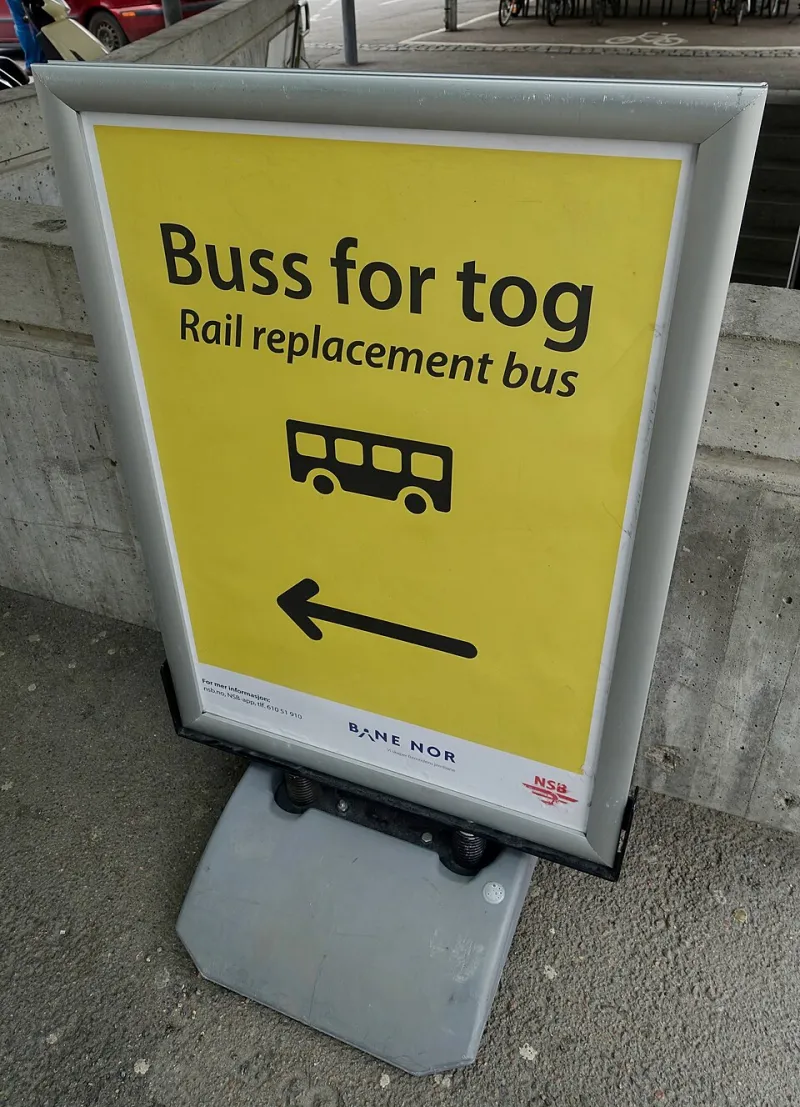
Photo: Wolfmann, CC BY-SA 4.0, via Wikimedia Commons
Walk down any UK high street and you can tell which businesses treat the pavement as an afterthought. The fascia has been sweated over; the A-board looks like it was rescued from a skip. That is a missed opportunity, because the street-level sign is often the first thing a customer reads and the last thing they see before they decide whether to come in. It deserves the same design thinking as the shopfront, plus a healthy dose of practicality.
This is a field guide to the signage that lives outside the door: A-boards, pavement signs, hanging signs, banners and forecourt displays. It is not legal advice, and rules vary across the UK, but it covers the questions worth asking before you put anything on the pavement.
The pavement is a shared room
A shopfront sign is mostly a conversation between you and your customer. A pavement sign is a conversation between you, your customer, the council, the highways authority, wheelchair users, parents with pushchairs, delivery drivers and the person trying to get to the bus stop. That is a lot of stakeholders for a piece of board.
The best street signage behaves like good furniture in a shared room: it is useful, it is stable, and it does not block the way. The worst behaves like a discarded sofa. The difference is usually not budget. It is whether anyone thought about the pavement as a place people move through.
First, the licence
In England, placing tables, chairs or signage on the pavement usually needs a pavement licence from the local council. The regime has been through several changes in recent years, and councils apply their own conditions, so check the current rules with your authority before you order anything. In Scotland, Wales and Northern Ireland, the position is different again — ask the relevant highways or licensing team.
A few practical points come up again and again. Keep a clear route for pedestrians, often at least 1.5m, and never block kerbs, crossings, bus stops, tactile paving or fire exits. Do not assume that because other businesses have boards out, yours is automatically fine. Enforcement tends to arrive when someone complains, and the complaint is usually about obstruction.
Stability is not a vibe
A lightweight A-board that skitters across the pavement in a gust is not charming. It is a hazard, and it is a bad advertisement. Stability comes from mass, geometry and surface contact. Water-fillable or sand-weighted bases help. So does a low centre of gravity, a wide footprint and a hinge that locks.
Check the wind rating if the manufacturer provides one, and be honest about your location. A sheltered courtyard is not the same as a seafront promenade or a corner between two tall buildings where the wind funnels. If the board is going out every day, it needs to be easy to bring in every night. If it is too heavy for staff to move, it will stay out in weather it should not.
Keep the route clear
Accessibility is not a footnote here. A board that narrows a pavement can make a route impassable for a wheelchair, a mobility scooter, a double pushchair or someone with a guide dog. Tactile paving is a navigation aid, not a decorative strip; do not park a sign on it.
The test is simple: can two people pass comfortably, including one wheelchair user? Can someone with low vision detect the board without walking into it? Does the board have a contrasting edge or a cane-detectable base? If the answer is no, the design needs work.
Hanging signs and banners: the vertical version
Hanging signs solve the obstruction problem by getting out of the way, but they create their own issues. Fixings must suit the wall — brick, render, stone and timber all behave differently. A bracket that is fine for a lightweight panel can tear out of soft masonry. Check head clearance, especially over a busy pavement, and make sure the sign cannot swing into a window or a person.
Banners are the wild west of street signage. They are cheap, fast and often off-brand. If you use one, treat it as a proper temporary sign: correct dimensions, hemmed edges, eyelets that will not tear, and a fixing method that does not rely on hope. A banner that flaps itself to death in a week is not a bargain.
Weather, theft and the British compromise
The UK climate is a long-running stress test. Rain, UV, frost and salt all attack signage. Powder-coated aluminium and stainless fixings age better than untreated steel. Printed panels need UV-resistant inks and a laminate that can handle wet-dry cycles. Wood needs proper sealing, and MDF has no business outdoors unless it is fully protected.
Theft is a real issue in some high streets. A removable panel, a security chain, a serial number or a lockable base can all help. Insurance may cover replacement, but it will not cover the embarrassment of an empty frame outside your shop for a fortnight.
The British compromise is usually a well-made board that is heavy enough to stay put, light enough to move, and simple enough to bring in at night. That is not glamorous, but it works.
Temporary does not mean off-brand
The biggest design mistake with street signage is treating it as disposable. A fluorescent yellow poster board with clip-art arrows tells customers something about your brand, and it is probably not what you want them to hear. Temporary signage should still use your typeface, your palette and your tone of voice. It can be louder than the fascia, but it should not be from a different company.
Keep a small kit of approved layouts: a daily offer board, an opening-hours panel, a direction sign, an event banner. Give staff a template and a few rules about what can change. That way the pavement sign looks like a member of the family, not a distant cousin who turned up uninvited.
A quick pre-launch checklist
Before anything goes outside, run through this:
- Do you have the correct pavement licence or permission, and does the board match the conditions?
- Is there a clear route for pedestrians, including wheelchair users and pushchairs?
- Is the board stable in wind, and can staff bring it in easily?
- Are fixings suitable for the wall or ground, and is head clearance safe?
- Is the message legible from the pavement, in dull light and from an angle?
- Does it use your brand type, colours and tone — not a stock template?
- Is there a plan for theft, damage and nightly storage?
- Would you be happy to see it outside a competitor's shop?
If the answer to the last question is no, keep working. The pavement is part of your shopfront, and it is doing brand work whether you designed it or not.