The Fence That Sells: Making a Building Site Look Like It Means Business
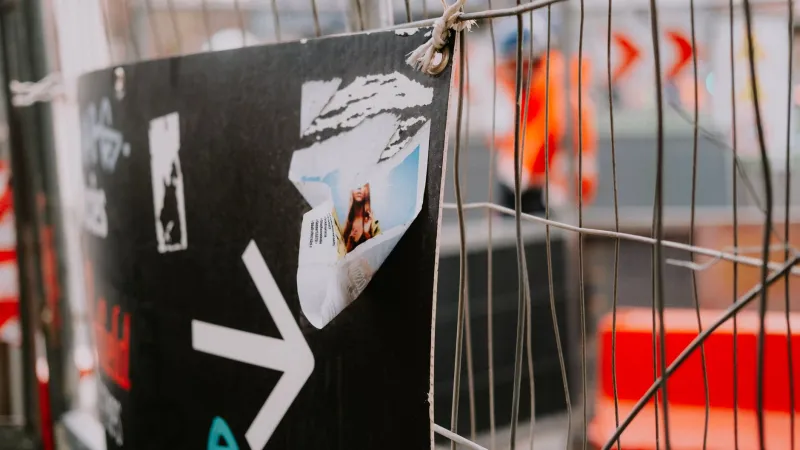
Scaffolding goes up, the shopfront disappears, and a length of plywood appears with a phone number and a promise to be back soon. It is understandable. The job is to keep people safe and the site secure. But a hoarding is not just a barrier. On plenty of UK high streets in 2026, it is the most visible thing your organisation owns for weeks or months at a time. Treat it like a temporary banner and it will look like one. Treat it like a shopfront with a hard hat on and it can do real brand work while the real shopfront is being built.
The hoarding is the shopfront with a hard hat on
A good hoarding does three jobs at once. It protects people, it explains what is happening, and it keeps the brand present when the lights are off and the door is shut. That third job is the one that gets forgotten. Customers still walk past. Neighbours still look. Competitors still notice. If the site fence is a patchwork of contractor logos, safety notices and a faded printout, the message is not 'we are investing here'. The message is 'we will get round to it'.
Start with a simple question: what should someone think when they walk past? If the answer is that the shop is closed and the brand has gone quiet, the hoarding is doing its job badly. If the answer is that something is being improved and the business is still part of the street, you are on the right track.
Check the rules before you fall in love with a design
Temporary does not mean regulation-free. Hoardings can touch planning, advertising consent, highway licensing and landlord approvals, depending on where they sit and what they look like. A conservation area, a listed building or a sensitive street scene will usually mean a slower conversation. A hoarding that projects over the pavement may need a licence from the local highway authority. A large advert on a site fence may need advertisement consent. The principal contractor will also have views on fire performance, wind loading, access and site security.
None of this is a reason to leave branding to the last minute. It is a reason to bring it up early. Ask the council what it expects before the design is signed off. Ask the landlord what the lease says about temporary signage and fixing methods. Ask the contractor what can actually be installed without blocking access or creating a maintenance problem. A few awkward questions now are cheaper than a beautiful hoarding that has to come down because nobody checked.
One practical note: keep the safety information clear and legible. Branding should not fight the notices that tell people where to walk, who to call or what is happening. The best site graphics make the required information feel part of the design rather than something stuck on afterwards.
Materials that can take a British building site
A hoarding lives outdoors, often in a wind tunnel between buildings, and often beside trades who are not gentle with surfaces. The material choice should match the lifespan and the location. Painted plywood can work, but it needs proper sealing and a finish that can survive damp. Aluminium composite panels give a flat, rigid face and take printed graphics well. Foamed PVC is useful for shorter runs and lighter panels. Polycarbonate or solid panels may suit areas where impact is likely. Mesh banners are handy where wind load is a concern, but they read differently from a solid face and need careful tensioning.
Laminates matter too. Anti-graffiti film can make cleaning easier. A matt finish can look more considered than a glossy print that reflects the sky. Fixings should be specified, not improvised. If the hoarding is going to be up for six months, it is worth asking how the graphics will be cleaned, repaired and replaced when a panel gets knocked. Temporary signage that cannot be maintained quickly stops being temporary and starts being tatty.
Get the contractor on side early
Contractors are not the enemy of good branding. They are the people who know which panels can be drilled, which walkways must stay clear and which day the scaffolders need access. Bring them into the conversation before the artwork is final. A simple site meeting with the site manager can save a lot of guessing. Agree who installs what, who checks the fixing points, and who is responsible if a panel comes loose.
It also helps to give the contractor a clean set of instructions. A marked-up elevation, a fixing schedule and a clear contact for replacements will go further than a PDF and a hopeful email. If the site has a principal contractor under CDM arrangements, make sure the temporary signage is included in the relevant site paperwork. Nobody wants a branding discussion to become a health and safety surprise.
Join the dots to the permanent sign
The temporary hoarding should feel like a preview, not a different brand. Use the same logo, the same colours and the same tone of voice that will appear on the finished shopfront. If the permanent fascia is going to be a deep green with brass lettering, do not put a bright blue hoarding outside for three months. If the interior fit-out is using a particular typeface, let the hoarding share it. The transition should feel like one story, not two unrelated campaigns.
There is a practical side to this as well. The hoarding is a chance to test how a colour looks at street level, in British light, beside the actual neighbouring buildings. It is not a perfect proof, but it is more useful than a screen. If the colour looks wrong on the fence, it may look wrong on the fascia too. Better to find out now.
Make it easy to maintain and easy to remove
A hoarding is a working surface. It will get splashed, scuffed and leaned on. Keep the design simple enough to patch. Avoid putting critical information right where a delivery driver will reverse into it. Leave a clear margin at the bottom for dirt and damp. Use panels that can be replaced individually rather than a single printed sheet that has to be redone in one go.
Plan the removal as well. The end of the project is not the moment to discover that the hoarding was fixed with fifty tubes of adhesive. Ask how it will come down, what will be reused and what will go to waste. A temporary sign that is designed for disassembly is a tidier piece of work all round.
A building site is never going to look like a finished shop. It does not need to. It just needs to look deliberate. Get the permissions, materials, contractor and permanent brand talking to each other, and the fence outside can do more than keep people out. It can tell them what is coming back.